Prevention seems like it should be pretty simple for educators to understand, but it can be challenging to think through all the ways that adults can change environments ahead of time to change behavior outcomes.
We understand what it means to have a high-quality classroom environment….
Read this article to learn about high quality environments- Early Childhood
We also understand what it means to have recommended adult-child interactions…
Use this checklist to evaluate how you are doing with adult-child interactions.
When we do these things we ensure that the environment and interactions within the classroom lead to positive behavior outcomes. This is called putting putting preventative practices into place. Behaviors may still arise, but having measures in place ahead of time can ensure that it goes more smoothly.
Positive Behavior Intervention and Support is one preventative framework that schools throughout OHIO employ to set kids up for behavior success.
Positive Behavioral Interventions and Supports (PBIS) is a framework that guides school teams in the selection, integration, and implementation of evidence-based practices for improving academic, social, and behavior outcomes for all students. PBIS is a research-based system, that employs a positive approach to discipline. When implemented with fidelity, PBIS can reduce office referrals, in-school suspensions, and out-of-school suspensions, thereby increasing instructional time for students. The PBIS framework provides support to students, families, and educators by using a proactive approach to teach all students the knowledge, skills, and attitudes needed to be competitive and successful wherever their path takes them.
The PBIS process emphasizes four integrated elements:
- Systems that efficiently and effectively support implementation.
- Data informs practices and decision making.
- Practices and interventions provide a continuum of multi-tiered supports to address varying student needs.
- Outcomes are continually monitored for progress to ensure systems and practices are effectively meeting the needs of students, staff, and families.
Implementation of PBIS helps eliminate barriers to learning and creates a consistent, safe, and positive school climate. PBIS is not a curriculum or a one-day training. PBIS is a systems change process that requires on-going commitment to achieve the best outcomes for students, staff, and families.
Ohio law requires that schools and districts adopt policies and procedures regarding PBIS. If you have questions about your school’s PBIS policy, please contact your local school administrator.
Having rules drawn out, clear and present in all educational settings across a school wide system can be one important preventative measure. Here is an example of a school districts set of rules.
Check out this video on creating a Behavior Matrix in your School.
Be Safe
-
Elementary School:
- Keep hands, feet, and objects to yourself.
- Walk in the hallways—no running or pushing.
- Follow safety rules during recess (e.g., no rough play or pushing on playground equipment).
- Stay within designated areas on the school grounds.
-
Middle School:
- Follow instructions during fire drills, lockdowns, and other safety procedures.
- Keep personal items, like backpacks and electronics, safely stored in designated areas.
- Use equipment safely (e.g., no roughhousing in gym class or using equipment improperly).
- Report unsafe situations or accidents immediately to an adult.
-
High School:
- Ensure all personal belongings are stored securely in lockers or designated spaces.
- Follow safety protocols for lab work, shop class, and other activities requiring special precautions.
- Respect school boundaries and avoid wandering the halls without permission during class time.
- Participate in emergency drills and procedures calmly and responsibly.
Be Respectful
-
Elementary School:
- Use kind words and actions with others.
- Listen when someone is speaking, whether it’s a teacher, peer, or visitor.
- Keep the classroom and school clean by picking up after yourself.
- Wait your turn and take turns during group activities or games.
-
Middle School:
- Use polite language with peers and adults, and avoid gossip or hurtful words.
- Respect other people’s personal space, especially in crowded hallways or classrooms.
- Value different opinions, even if you disagree.
- Treat school property and the belongings of others with care.
-
High School:
- Show respect for teachers, classmates, and staff by being punctual and attentive.
- Avoid interrupting others during class discussions or meetings.
- Respect the rights and opinions of others, even when engaging in debates.
- Take care of school property and personal belongings and avoid damaging anything on school grounds.
Be Responsible
-
Elementary School:
- Complete assignments on time and ask for help when needed.
- Take care of your belongings (e.g., backpack, supplies) and keep them organized.
- Follow the classroom schedule and rules without needing reminders.
- Report problems to an adult if you see something unsafe or inappropriate.
-
Middle School:
- Manage your time effectively to complete homework and classwork on time.
- Be prepared for class with the necessary materials (books, homework, supplies).
- Take ownership of your actions and make good choices, especially in social situations.
- Follow through with commitments to group projects or activities.
-
High School:
- Prioritize your studies by staying on top of assignments, projects, and tests.
- Maintain academic integrity by avoiding cheating or plagiarism.
- Be a role model for younger students by demonstrating good citizenship and work ethic.
- Take responsibility for your own behavior and resolve conflicts in a mature and respectful way.
As a paraeducator it is important for you to ensure you know the rules of the school that you are working in so that your students know they can count on you to guide them and follow through on school procedures.
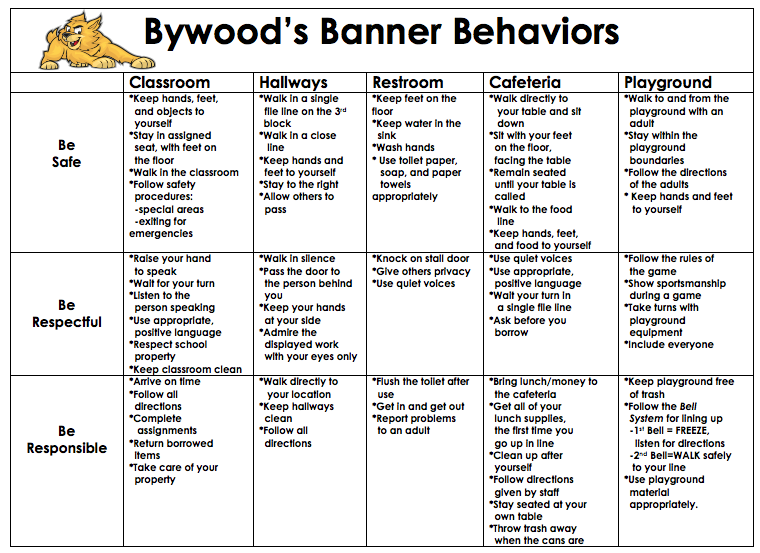
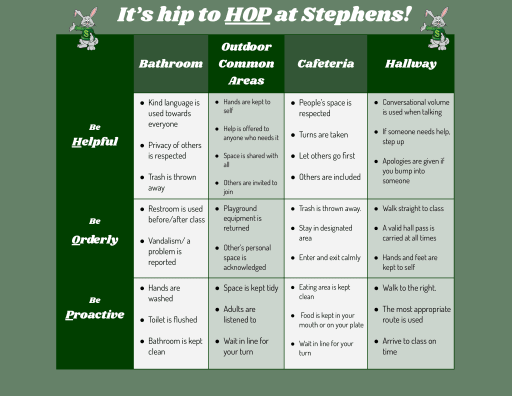
Beyond have a general list of rules as listed above. Some schools design a behavior matrix to describe the rules across various settings in the school. Here are some examples of behavior matrices….